One of my mentees decided to find out.
He works as an analyst at an agency and built an AI agent that checks a client’s GA4 data every day. He wanted to give it complete freedom and see what it could discover on its own.
He already had a tracking plan and clear metric definitions, but deliberately kept them away from the agent.
I understand the logic. Whenever you try a new tool, you want to see what it can do without much guidance.
Within a week, things started going wrong.
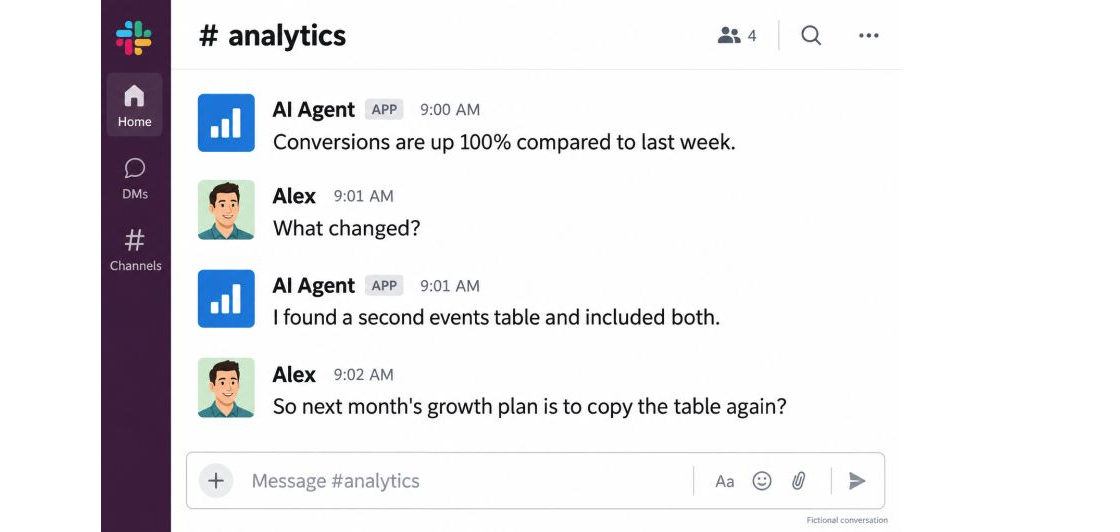
On some days, the agent ran 31 queries. On others, it ran 23. He couldn’t explain why. One report pulled data from two different event tables. The agent also invented a metric that nobody had asked for.
Each query looked reasonable on its own. But taken together, the report was impossible to trust.
I’ve seen this happen many times in analytics.
Most of what makes a number correct comes from decisions your team made earlier: who counts as a user, which event counts as a conversion, and which table is the source of truth.
Those decisions don’t live in the raw data. Without them, the agent has to guess. It usually chooses whatever sounds reasonable or is most common online, then reports the result with complete confidence.
My preferred order is simple: rules first, freedom second.
Give the agent a short metric dictionary written in plain language, a few example queries, and a set of clean tables. Once that foundation is in place, let it explore as much as it wants.
That’s what my mentee is trying next.
Want a stronger data analyst role or a raise? Grab the FREE Product Analyst Playbook and get the exact roadmap to your next offer.