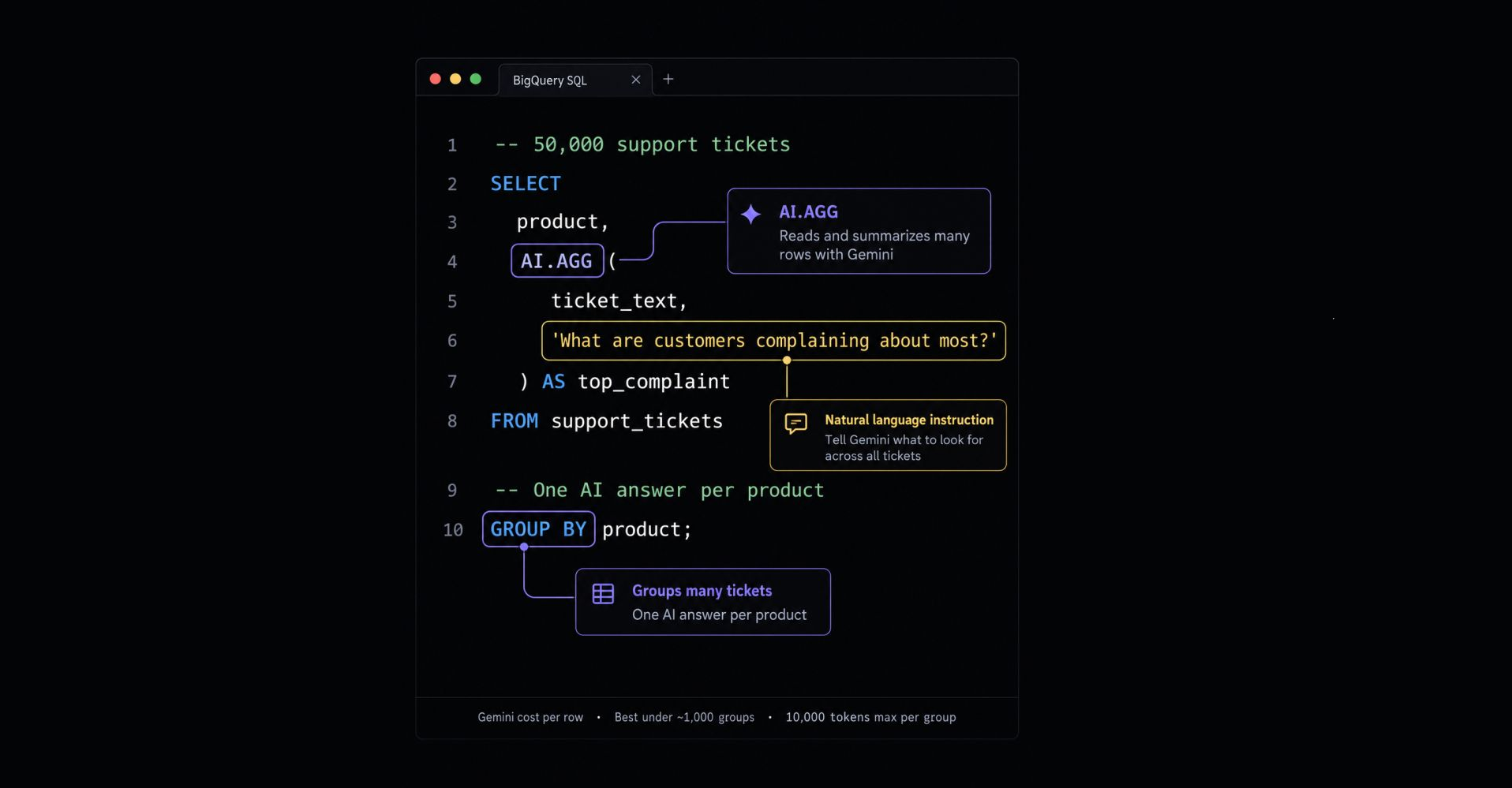
Meet AI AGG. It's an aggregate function, like SUM or COUNT, except instead of adding numbers it reads your data and does what you ask in plain English. Group 50,000 support tickets by product, tell it "what are customers complaining about most?", and you get one answer per product, right in SQL.
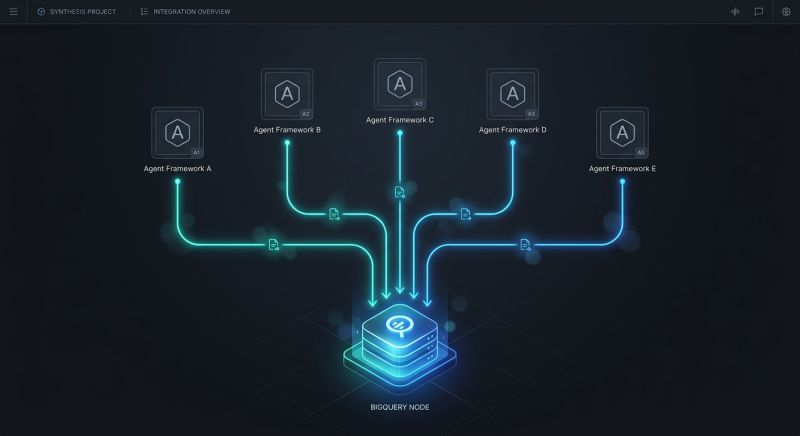
It's not just text, either. It takes images, PDFs, audio and video from Cloud Storage. It can return a structured result instead of free text. And it batches the data itself, so it works on volumes that don't fit into a single model context.
Remember how this used to go? Export the reviews, skim a few hundred, tag them in a spreadsheet, build a pivot, write a summary nobody reads. A week of work. Now it's one GROUP BY.
Before you rewrite all your reports:
- It isn't cheap. Every row goes to Gemini, and the docs warn that batching sends more tokens than your raw data contains.
- The docs recommend staying under about 1,000 groups, and the output is capped at 10,000 tokens per group.
- With a JOIN or ORDER BY ... LIMIT it may process more rows than you expect. Google suggests saving the data you need into a table first.
Last week BigQuery let us stop copy-pasting expressions. This week it reads the comments for us.
At this pace, the only thing left for analysts will be explaining the bill. Should I start updating my CV?
Want a stronger data analyst role or a raise? Grab the FREE Product Analyst Playbook and get the exact roadmap to your next offer.