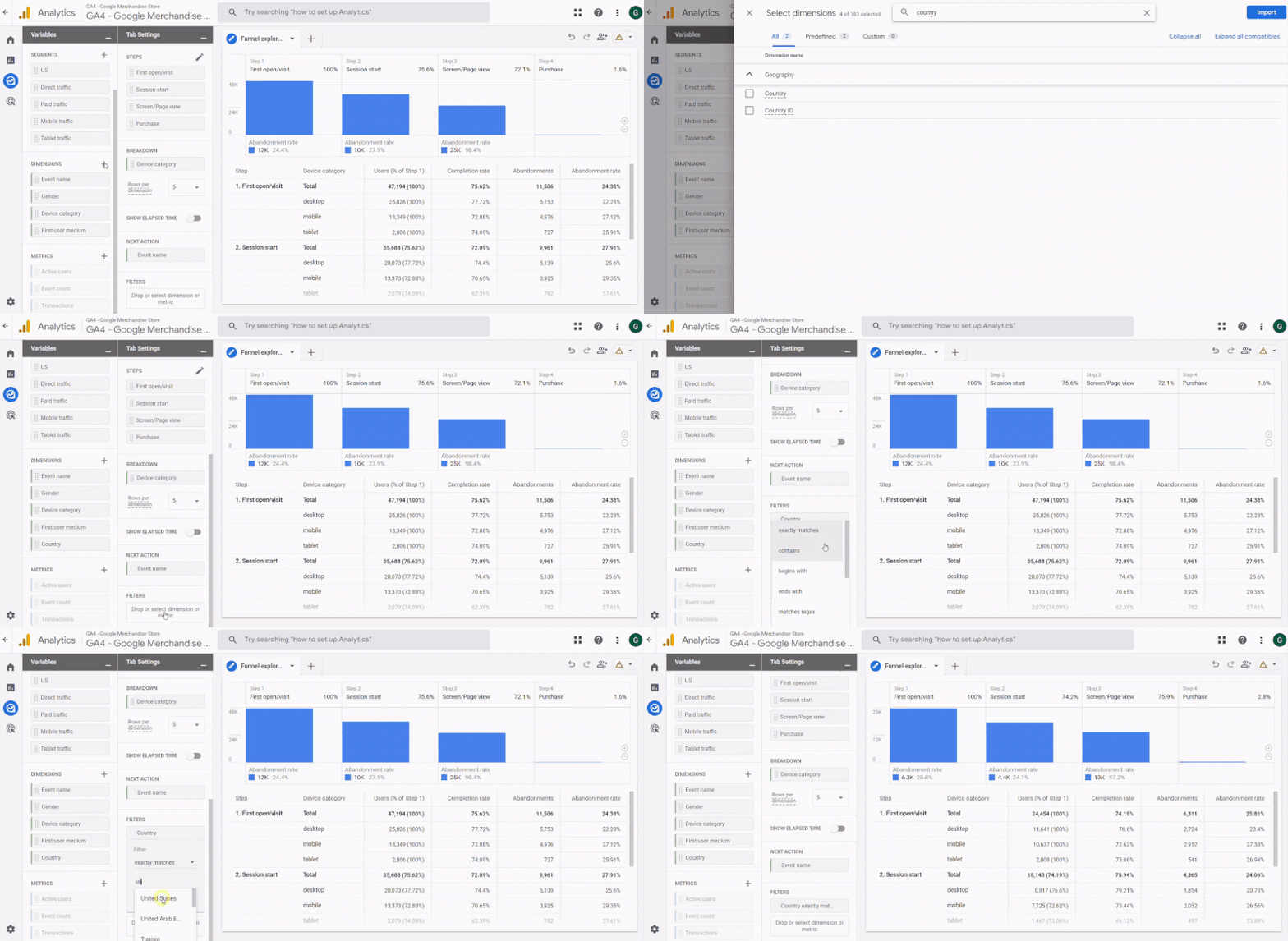

In real projects, GA4 funnels already lag behind reality the moment you open the report. Google throttles hit collection, batches uploads, and rewrites timestamps before they reach the UI. Meanwhile, CRM and BI capture deals in real time - so as soon as you compare GA4 to downstream systems, the funnel looks distorted.
Automatic events don’t speak the same language as your business logic:
1. GA4 calls a session “engaged” after 10 seconds, while sales call it a lead only after qualification.
2. Conversion events are delivered hours (sometimes days) late because Firebase batches and quota limits slow the pipeline.
3. Custom CRM statuses advance instantly, but GA4 relies on auto events that can be dropped or resampled when traffic spikes.
The result? A funnel that looks polished but is constantly reshuffled by latency and data-loss rules. Numbers never stabilize, and trust in analytics evaporates once stakeholders notice that “yesterday” keeps changing.
What’s the bigger lesson?
You can’t expect GA4’s delayed, throttled telemetry to narrate your business journey on its own. Unless conversions are defined consistently and buffered for GA4’s delivery lag, CRM and GA4 will always disagree - and the debate about “which number is right” never ends.
So how do you fix it?
When I work with teams on this, the steps are clear:
1. Define one event set aligned with business rules and final CRM statuses.
2. Implement server-side/custom events so key conversions bypass client delays.
3. Build reconciliation dashboards across GA4, CRM, and BI with explicit time windows (e.g., T+48h).
4. Document the entire approach so the logic survives analyst turnover.
The funnel is too important to outsource to auto-tracking plus delayed ingestion. Align GA4 with your business logic, account for Google’s delivery lag, and only then can you trust the story your funnel is telling.
Want a stronger data analyst role or a raise? Grab the FREE Product Analyst Playbook and get the exact roadmap to your next offer.