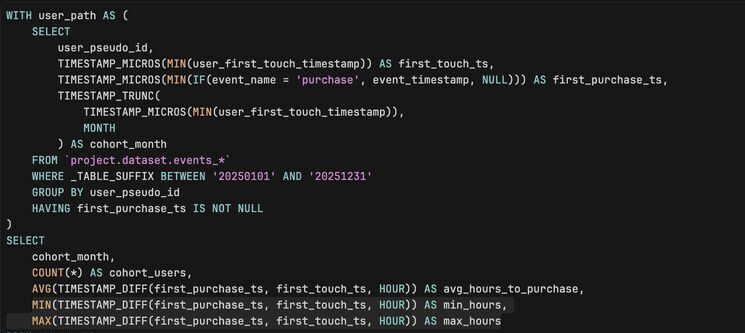

Time-to-purchase shows how long it takes a user to go from first touch to first order. It is one of the most practical metrics for planning remarketing, sales cycles, and cash flow.
It goes wrong surprisingly often:
• events are scattered across multiple sessions and devices
• the “first” touch is taken from whatever report is easiest, not from raw data
• calculations double-count or misalign users, producing misleading averages
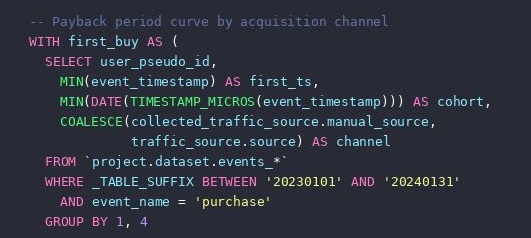
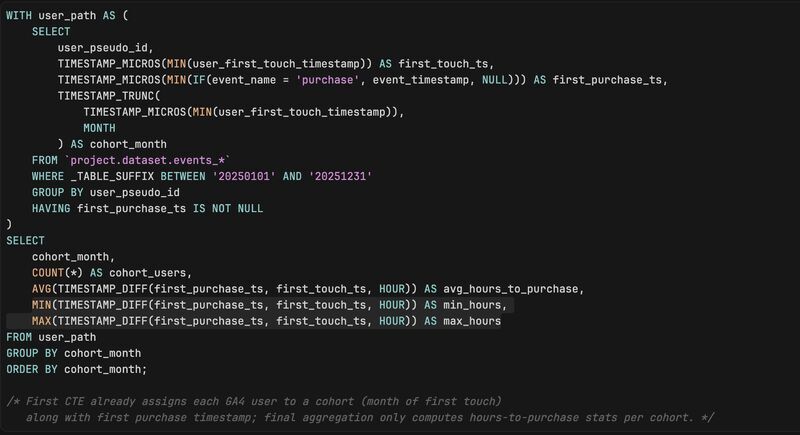
A cleaner approach in SQL is to anchor everything at the user level:
1. Identify each user’s true first interaction timestamp.
2. Find the timestamp of their first purchase.
3. Calculate the time difference between the two.
Once you have this per-user metric, you can summarize it by channel, campaign, or cohort and see how quickly different segments convert. That is far more actionable than a generic “average time to purchase” taken from a UI.
It turns the question from “Do people buy?” into “How long do they realistically need before they buy?” - and that changes how you design your follow-up and remarketing.
Want a stronger data analyst role or a raise? Grab the FREE Product Analyst Playbook and get the exact roadmap to your next offer.