Another model release.
Astra. Another Anthropic update. Another agent that can write SQL, clean data, build dashboards, and explain why your revenue dropped.
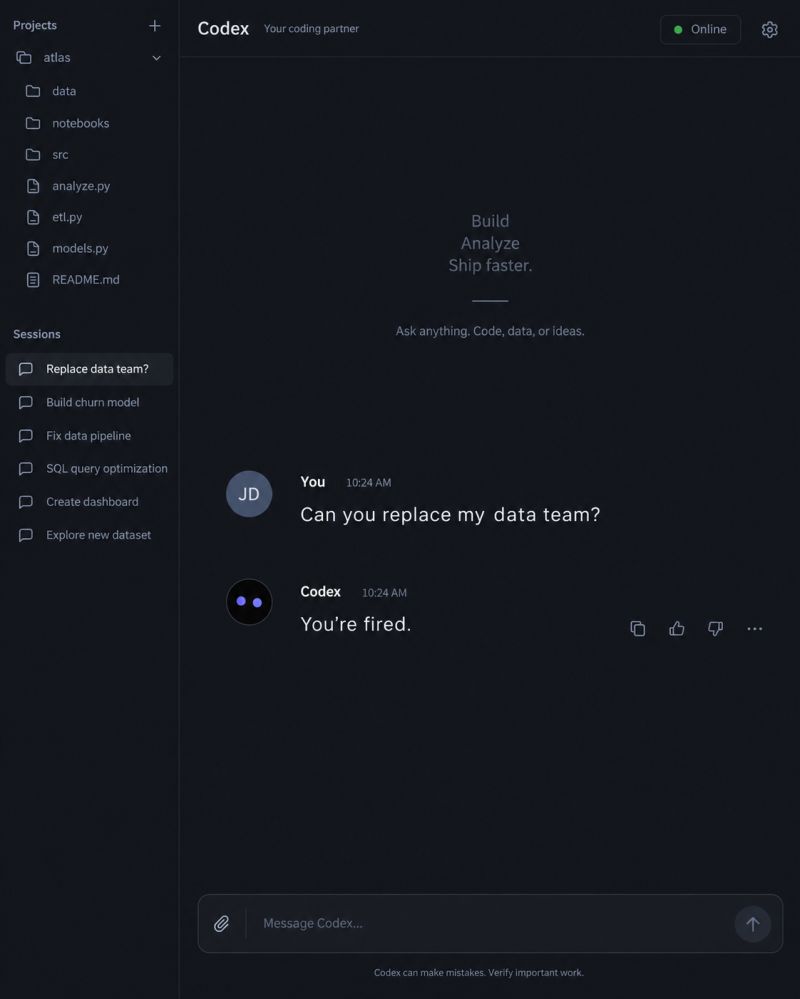
The conclusion seems obvious: data analysts are finished. Data teams are next.
Except the numbers say something else.
Joe Reis pulled together recent research on what is happening inside data teams:
- In his survey of 1,101 data practitioners, 42% expect their teams to grow in 2026. Another 44% expect headcount to stay flat. Only 7% expect cuts.
- dbt Labs’ 2026 State of Analytics Engineering report shows 36% of respondents increasing team budgets, versus 14% cutting them. 57% are increasing warehouse and compute spend.
- Robert Half reports that 78% of leaders plan to expand permanent headcount in the second half of 2026. Data engineering is still one of the core hiring bottlenecks.
So no, companies are not replacing their senior data architects with an LLM.
They are giving those architects better tools.
And that is where the story gets uncomfortable.
The work AI handles first is often the work junior people used to learn on: baseline regex, boilerplate SQL, converting dialects, drafting mock schemas, cleaning up routine analysis.
That work was never glamorous. It was the apprenticeship.
You did it, made mistakes, learned how bad data behaves, and eventually became someone who could design a system instead of just query one.
Now teams can skip much of that work with a model.
Great for productivity. Potentially terrible for the talent pipeline.
Because if fewer people get paid to do the boring early work, where do the next senior data people come from?
Another Astra release will not erase data teams.
It may erase the path people used to take to join them.
That is a much scarier headline.
Want a stronger data analyst role or a raise? Grab the FREE Product Analyst Playbook and get the exact roadmap to your next offer.