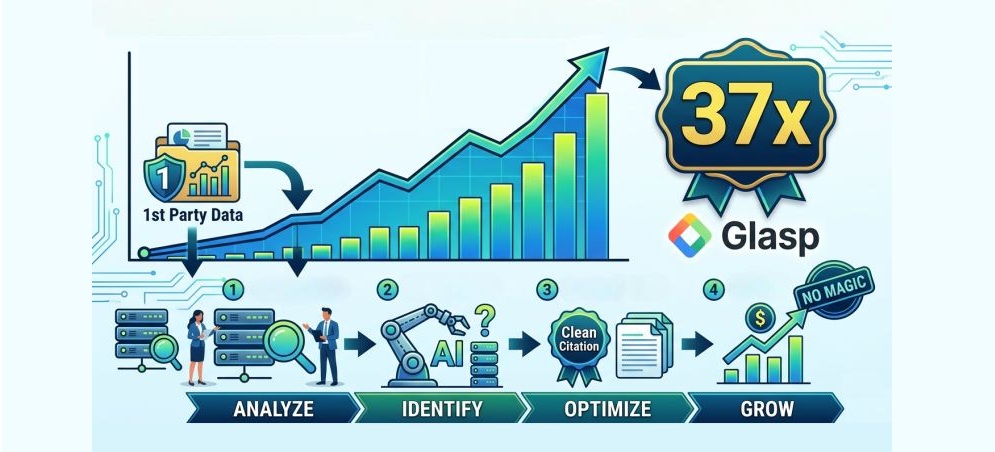
A great case study on how first-party data beat every trendy AI optimization tool out there.
Metrics
- 517 → 19,129 sessions from ChatGPT
- 37x growth in 4 months
- 400,000+ YouTube Q&A pages
- 2–3M bot requests per week
What's the project?
Glasp – a service for saving and sharing web content. The team figured out how to drive traffic from ChatGPT – not by guessing, but by measuring.
Where did they start?
Everyone around them was "optimizing for AI": asking ChatGPT the same questions 100 times, checking whether it cited them or not. Glasp took a different approach – they dug into their own server logs.
What was the goal?
Understand which pages AI was already pulling, where it was hitting 404s, what was actually converting into visits – and double down on exactly that.
What happened?
Cloudflare logs → weekly snapshot → Firestore → page prioritization for rewrites. They found ChatGPT was pulling mostly from their YouTube Q&A page corpus. Cleaned up duplicate URLs, killed dead pages, rewrote titles and TLDRs for citation-friendly format.
The takeaway?
While everyone's asking ChatGPT how their brand appears in AI – smart teams are looking at their server logs.
The case study is here.
Want a stronger data analyst role or a raise? Grab the FREE Product Analyst Playbook and get the exact roadmap to your next offer.