
In real projects, retention by cohorts often looks very different in product analytics tools compared to GA4. One system shows a steady curve, the other a sharp drop. When you dig in, it’s not the users who are inconsistent — it’s the definitions and identifiers.
Why is this a problem?
GA4 and product analytics platforms calculate cohorts and active users in different ways:
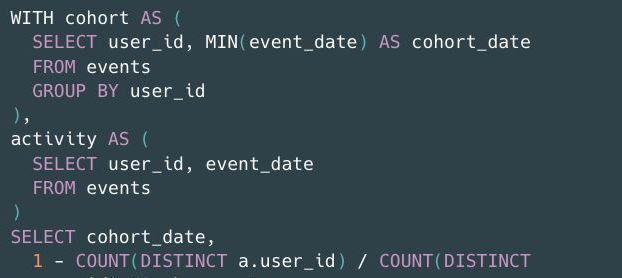
• Cohorts may be defined by first event vs. signup date.
• “Active user” might mean any session in GA4, but specific actions in product analytics.
User identity is based on device_id in GA4 unless you enforce user_id. Product tools usually lean on account- or profile-level IDs.
The result: metrics that look like they’re describing the same thing but aren’t. For the business, that means confusion, endless debates, and decisions made on mismatched data.
Retention is only meaningful if everyone speaks the same language. Without a shared metric dictionary and a unified way of identifying users, GA4 and product analytics will always contradict each other. And if your data doesn’t align, trust erodes fast.
When I help teams address this, the playbook is clear:
• Define one set of rules for retention and active user.
• Roll out a single user_id across all sources.
• Build reconciliation dashboards to cross-check results.
• Start with a pilot on one product and scale once the logic is validated.
Retention should guide decisions, not spark arguments. Alignment starts with shared definitions and a single source of truth.
Want a stronger data analyst role or a raise? Grab the FREE Product Analyst Playbook and get the exact roadmap to your next offer.